Source Ergonomic Toothbrush for Home, Hotel, and Travel
Find and compare 30 ergonomic toothbrush options from China. Explore models with PP handles and bristle heads, available in adult and child sizes. These eco-friendly tools feature medium to soft hardness for effective oral care and tongue cleaning in various settings.
Key considerations
Products List


$0.08 - $0.18
Moq: 5000


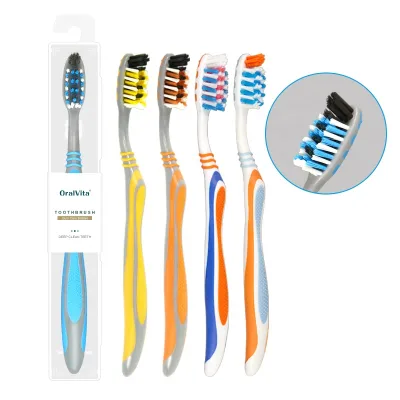


Comprehensive Sourcing Guide
Ergonomic Toothbrush Sourcing Guide
The global market for ergonomic toothbrushes presents a diverse array of options tailored for adult and child demographics, with specific models designed for home, hotel, and travel usage. Buyers must navigate a landscape where product attributes vary significantly, ranging from foldable designs to non-foldable rigid structures, and from square to diamond-shaped brush heads. Understanding these distinctions is critical for aligning procurement with specific user needs, as the ergonomic form factor directly influences cleaning efficacy and user comfort in daily oral care routines.
Sourcing decisions should prioritize the verification of material composition and functional features, such as eco-friendly claims and anti-static properties, which are observed in specific listings. While some models feature medium hardness bristles suitable for general cleaning, others offer soft bristles for sensitive gums, necessitating a clear definition of the target user profile before engaging suppliers. The availability of customization services allows buyers to tailor colors and packaging, but the core ergonomic design must remain consistent with the intended application to ensure market acceptance and functional reliability.
Product Scope and Observed Listing Signals
Buyers should analyze the observed price range of 0.05 to 18 USD to understand the tiered nature of the market, where cost often correlates with specific material grades and certification levels. The minimum order quantities (MOQ) span from 50 to 57,600 units, indicating that suppliers cater to both small-scale trial orders and large-volume distribution contracts. This wide variance requires procurement teams to carefully calculate unit economics based on their specific volume requirements, ensuring that the selected supplier can accommodate the desired order size without compromising on lead times or quality consistency.
The product scope includes a variety of models identified by codes such as 250, 8007, and ATB-391, each potentially offering unique ergonomic benefits. Some listings highlight specific features like tongue cleaning functions alongside teeth cleaning, while others focus on interdental care with specialized brush shapes. It is essential to verify that the specific model selected matches the intended ergonomic profile, as the physical dimensions and handle materials, such as PP, directly impact the grip and maneuverability required for effective oral hygiene.
Technical Specifications to Verify
Procurement teams must rigorously verify the physical dimensions and weight specifications to ensure the product meets ergonomic standards for the target demographic. Observed data indicates net weights ranging from 10.5 grams to 17.5 grams and lengths varying between 14.5 cm and 19 cm, which significantly affect the handling experience. Buyers should request detailed technical drawings for specific models to confirm that the handle thickness and brush head angle align with the intended ergonomic design, preventing issues related to user fatigue or improper cleaning technique.
Material composition is another critical technical parameter that requires validation, particularly regarding the bristle and handle materials. While PP is a common handle material, the bristle composition must be confirmed to ensure durability and safety, especially for products marketed as eco-friendly. Additionally, the distinction between foldable and non-foldable designs must be clearly defined in the technical specifications, as this feature dictates the product's suitability for travel versus home use, directly influencing the packaging requirements and the overall user convenience.
Compliance and Safety Documentation
Ensuring that products meet international safety standards is paramount, with observed certifications including FDA, ISO, CE, SGS, BRC, and BSCI. Buyers must verify that the specific supplier holds valid certificates for the models they intend to purchase, as these documents confirm adherence to rigorous manufacturing and safety protocols. The presence of multiple certifications suggests a robust quality management system, but it is crucial to validate the scope of these certificates to ensure they cover the specific product lines and manufacturing processes involved in the supply chain.
Documentation should also address the specific regulatory requirements of the exporter markets, which are noted as global in the observed data. Different regions may have varying standards for oral care products, and suppliers must demonstrate compliance with local regulations in addition to international certifications. Procurement teams should request copies of recent test reports and audit summaries to confirm that the products are free from harmful substances and meet the safety expectations of the end consumers in their target markets.
Cost Drivers and Commercial Terms
The final cost of ergonomic toothbrushes is influenced by several factors, including the complexity of the mold, the quality of the bristles, and the extent of customization required. While the base price range is observed between 0.05 and 18 USD, the inclusion of features like anti-static properties or specific brush shapes can drive costs upward. Buyers should negotiate based on the total value proposition, considering that higher unit costs may be justified by superior durability, enhanced ergonomic design, or the inclusion of comprehensive certification packages that reduce downstream compliance risks.
Commercial terms such as MOQ and lead times are significant variables that impact the overall procurement strategy. With MOQs ranging from 50 to 57,600 units, suppliers may offer tiered pricing structures that reward larger volume commitments. It is essential to clarify the payment terms and delivery schedules, as the origin location in Yangzhou, China, may introduce logistical considerations. Buyers should ensure that the agreed-upon terms align with their inventory management capabilities and cash flow requirements to maintain a sustainable supply chain.
Supplier Qualification and Quality Control
Supplier qualification should extend beyond basic certification checks to include an assessment of their manufacturing capabilities and quality control processes. Given the observed diversity in product models and features, it is vital to verify that the supplier has the technical expertise to produce consistent ergonomic designs across different batches. Buyers should request samples of various models to evaluate the finish, bristle density, and overall build quality, ensuring that the supplier can maintain the high standards required for oral care products in a competitive global market.
Quality control protocols must be clearly defined and agreed upon before production begins, with a focus on critical control points such as material sourcing and final inspection. The availability of OEM services and custom color options indicates a flexible manufacturing environment, but this flexibility must be balanced with strict quality assurance measures. Buyers should establish clear acceptance criteria for defects and implement a robust inspection regime, potentially including third-party audits, to ensure that every unit meets the specified ergonomic and safety requirements before shipment.
Long-Term Procurement Checks
Sustaining a successful partnership with ergonomic toothbrush suppliers requires ongoing monitoring of performance metrics and market trends. Buyers should regularly review supplier adherence to agreed-upon specifications, particularly regarding the consistency of brush hardness and handle material quality over time. As the market evolves, suppliers may introduce new features or materials, and it is essential to evaluate whether these changes align with the buyer's long-term product strategy and customer expectations.
Continuous improvement initiatives should be encouraged, with suppliers expected to provide updates on their manufacturing processes and sustainability efforts. The observed eco-friendly features suggest a growing demand for sustainable products, and buyers should assess whether their suppliers are investing in greener materials and production methods. By maintaining open communication and setting clear expectations for innovation and quality, procurement teams can ensure a resilient supply chain that adapts to changing market dynamics while delivering high-value ergonomic toothbrushes to end consumers.
FAQs
What certifications do ergonomic toothbrushes have?
These products hold FDA, ISO, CE, SGS, BRC, and BSCI certifications. Such credentials ensure compliance with international safety and quality standards for oral care items. Buyers can verify these documents to confirm regulatory adherence for global export requirements and market entry.
Can I customize the color of the brush?
Yes, OEM service is acceptable for color customization. Buyers can request specific colors to match brand identity. This flexibility supports private labeling strategies and allows for distinct product differentiation in competitive retail environments across various global markets.
What materials are used for the handle and bristles?
The handle is made from PP plastic, while the bristles provide the cleaning surface. This combination ensures durability and effective oral hygiene. The materials are selected for safety and performance, meeting the functional requirements for daily home and travel use.
What is the typical net weight of these brushes?
Net weights vary by model, ranging from 10.5 grams to 17.5 grams. Specific models like ATB-368 weigh 10.5 grams, while others reach 17.5 grams. This variation allows buyers to select products based on specific packaging or shipping weight requirements.
Are these toothbrushes foldable for travel?
Options include both foldable and non-foldable designs. Some models are explicitly foldable for compact travel storage, while others are non-foldable for standard home use. This variety accommodates different consumer preferences for portability and convenience in hotel or travel scenarios.
What is the minimum order quantity for these items?
MOQs range from 50 to 57,600 units depending on the supplier and customization level. Lower MOQs allow for trial orders, while higher volumes support large-scale distribution. Buyers should confirm specific MOQs with manufacturers to align with their inventory and budget planning.